Basic Requirements for the Swimming Pool Substrate
The swimming pool substrate refers to the underlying structure upon which mosaic tiles are laid; it is typically composed of concrete, masonry, or other construction materials. Before installing the mosaic tiles, the substrate must meet the following basic requirements:
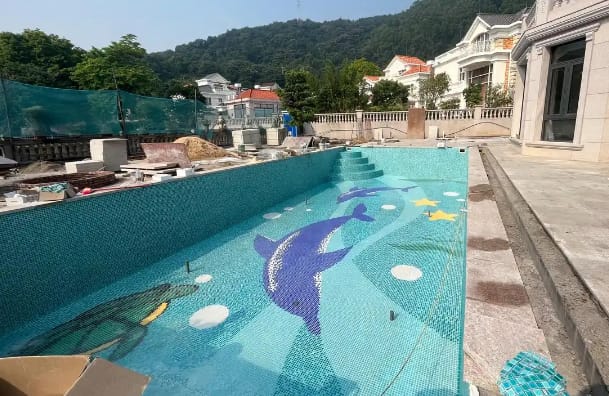
1. Structural Integrity: The substrate must possess sufficient strength to support the weight of the mosaic tiles and withstand potential pressure. Generally, the concrete strength grade should be no lower than C25.
2. Evenness: The surface of the substrate must be level, with deviations not exceeding 3mm, to avoid compromising the installation quality and the long-term durability of the tiles. If the substrate is uneven, leveling treatment is recommended prior to installation.
3. Dryness: The substrate must be thoroughly dry, with a moisture content of less than 8%. Excessive moisture can prevent adhesives or cement from drying properly, thereby weakening the bond strength of the mosaic tiles.
4. Stability: The substrate must be highly stable to prevent issues such as settlement or cracking, which could directly compromise the safety of the swimming pool.
5. Impermeability: Since the pool is constantly submerged in water, the substrate requires good impermeability to prevent water seepage from damaging the underlying structure.
Selection of Substrate Materials
Substrate materials should be selected based on specific project conditions; common materials include:
1. Concrete: The most frequently used substrate material; it offers excellent strength and durability and is a standard choice for swimming pool construction.
2. Masonry: In some regions, masonry (such as brick or tile) may be selected for the substrate to enhance aesthetics or slip resistance; however, the strength of the masonry units and the design of an adequate drainage system must be ensured.
3. **Cement Mortar:** Suitable for repairing and leveling the substrate, ensuring surface flatness and the ability to accommodate structural movement.
Technical Requirements for Substrate Preparation
Once the substrate material is selected, the preparation process is crucial and involves the following steps:
1. Substrate Cleaning: Thoroughly remove dust, oil, and other debris from the substrate surface to optimize mosaic tile adhesion.
2. Leveling: Use professional-grade cement mortar to level the surface and ensure overall flatness. During construction, use tools such as straightedges to verify compliance with standards. 3. Waterproofing: Installing a waterproofing layer is crucial for the swimming pool; typically, a waterproof coating is applied to ensure the substrate possesses excellent waterproofing properties. Application must strictly adhere to the manufacturer’s instructions, ensuring uniform coverage without leaving any untreated areas.
4. Impermeability Treatment: To enhance the substrate’s resistance to water penetration, it is recommended to use a high-performance waterproofing agent mixed with cement at a specific ratio for application.
5. Post-Pouring Curing: After the concrete substrate has been poured, effective curing measures should be implemented to maintain a moist environment, allowing the concrete to achieve optimal strength.