Marble mosaic is a decorative art form created by arranging and combining small, cut pieces of natural marble. Its essence lies not merely in the assembly of materials, but in leveraging the stone’s natural veining and color variations to construct visual imagery and textural effects that transcend the limitations of any single piece of stone. Central to this art form is the dialectical relationship between the “unit” and the “whole”: while each mosaic unit retains the inherent unpredictability of natural stone, craftsmanship transforms these into controllable components that are ultimately assembled into predetermined patterns or abstract compositions.
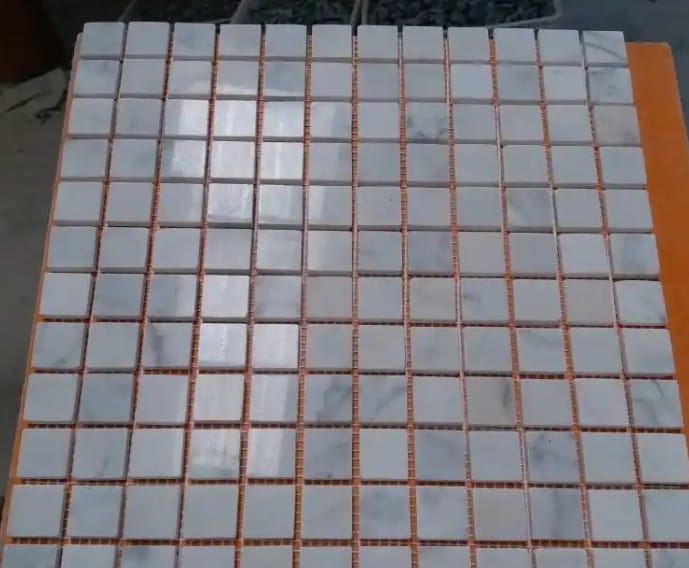
At a material level, the mineral composition of marble dictates the diversity of its colors and patterns. White marble is rich in calcite; green hues often derive from serpentine; and red or yellow tones are associated with impurities such as iron oxides. These geological origins ensure the high quality of the raw material, providing a rich palette for mosaic art. However, the presence of natural fissures and uneven hardness in the stone presents specific challenges for cutting and shaping processes.
Historically, the evolution of techniques to address these challenges has seen a shift from manual percussion to mechanical processing. Early artisans relied on hammers and chisels for rough shaping, producing stone fragments that were irregular yet imbued with a natural aesthetic. Following the Industrial Revolution, the adoption of water-jet cutting technology enabled marble to be cut into tiny units with precise dimensions and complex shapes—achieving accuracy down to the millimeter. This technological advancement not only enhanced the intricacy of patterns but, more importantly, transformed the logic of design: shifting from adaptive creation—where the craft was dictated by the specific characteristics of the material—to a design-led approach capable of precisely executing complex geometric forms and color gradients.
In contemporary home décor, the application logic of marble mosaics has shifted accordingly. Their value is no longer confined to traditional wall and floor surfacing. They now appear as functional surface materials—such as in kitchen backsplashes, bathroom wet-dry zone transitions, or furniture veneers—serving practical roles by offering moisture resistance, heat resistance, and ease of cleaning. Its artistic quality integrates into the space in novel ways: for instance, monochromatic feature walls composed of marble units—uniform in color yet varied in texture—emphasize subtle tactile contrasts rather than colorful patterns; alternatively, arrangements of units in graduated sizes create a dynamic visual rhythm within the space.
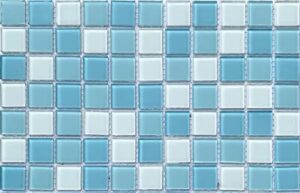
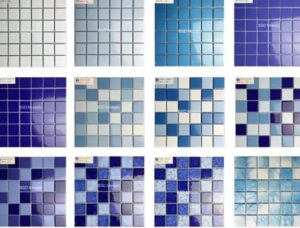
A notable trend in current practice is the juxtaposition and fusion of marble with other materials. Marble mosaic units are interlaid with glass, metal, or ceramic tiles, leveraging differences in luster, reflectivity, and texture to generate a multifaceted sensory experience. This fusion transcends traditional material boundaries, fostering a dialogue between the natural, substantial character of marble and the refined quality of man-made materials.
The evolution of marble mosaic from its historical origins to the present day represents a trajectory of increasing “control”—shifting from passively adapting to the stone’s inherent nature to actively harnessing technology to precisely shape its form. Ultimately, in contemporary spatial design, it has been transformed into a versatile design element capable of engaging with other material systems while offering both functionality and highly customized aesthetics. Its future potential may lie in its role as a fundamental modular component that, aided by digital design tools, helps construct spatial interfaces that are increasingly personalized and emotionally resonant.